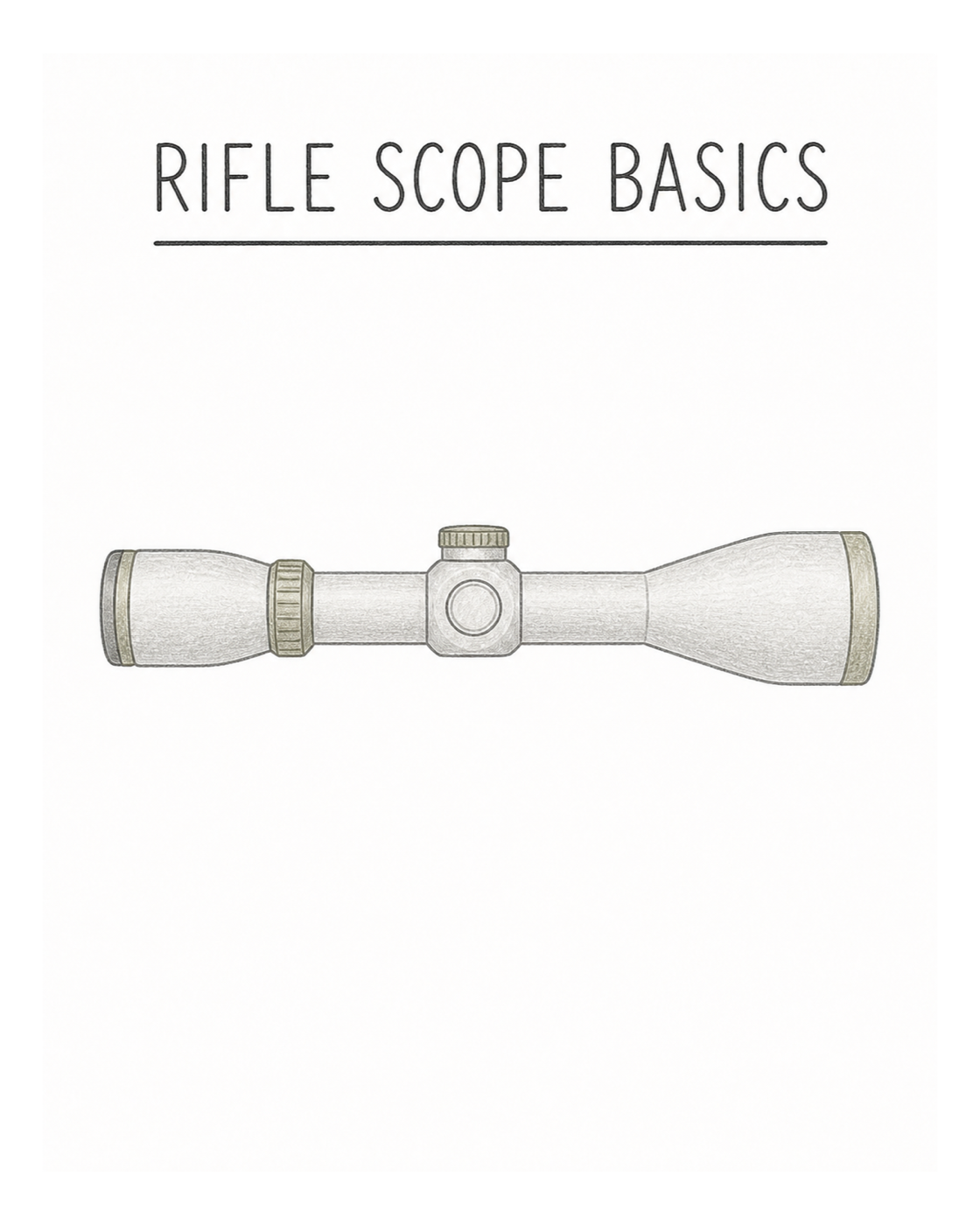
A scope name can look like a string of technical shorthand. Once you know the pattern, it becomes a useful description rather than a mystery.
Start with the numbers
On a scope marked 3–9×40, the first numbers describe the magnification range. The final number is the approximate diameter of the objective lens in millimeters.
Those numbers are a starting point, not a verdict on quality. Eye relief, clarity, durability, and fit all matter too.
Think about the country
More magnification is not automatically better. Dense timber, open basins, and mixed country each place different demands on an optic.
A new hunter is usually better served by a clear, dependable scope and time spent learning its controls than by the most complicated option on the shelf.
Learn with help
Ask a qualified instructor or reputable sporting-goods professional to check fit and mounting. Read the manufacturer’s instructions, practice at an established range, and follow every range rule.
Regulations and access rules change. Confirm current details with the responsible wildlife and land-management agencies before every trip.