You don’t need all the gear.
Hunting content can make it look like you need thousands of dollars in equipment before you can start. You do not.
Start with the species you plan to hunt, the legal requirements, the basic equipment that hunt requires, and safe, functional clothing and gear.
Good equipment can make a hunt more comfortable. Some specialized gear can make you more effective in the right situation. But owning everything is not the price of admission. You learn what matters by getting outside and paying attention to what actually helps.
You don’t need to know everything before you start.
Hunter education teaches important safety and legal basics. It does not turn anyone into an experienced elk hunter, turkey hunter, or waterfowler overnight.
Experience fills in the gaps. You learn where animals spend time, how wind affects a hunt, how to recognize sign, how animals react to pressure, how terrain changes movement, and which equipment actually matters to you.
Ask questions. Hunt with experienced people when you can. Expect to feel new for a while. Every hunter you trust had a first season too.
Finding animals is the real skill.
A lot of hunting conversations revolve around rifles, bows, optics, and equipment. Those things matter, but they do not help much if you cannot find animals.
Finding animals starts with a few basic questions. Where are the food, water, and cover? What does the terrain encourage an animal to do? What sign is fresh? What is the wind doing? How do time of day, hunting pressure, and the season change the answer?
You do not need to solve all of that at once. Just understand that the real work usually happens before a shot is ever possible.
There are no stupid hunting questions.
What does MOA mean? What is MIL? What does glassing mean? What is a thermal? Why does wind direction matter? What is an OTC tag? What is the difference between a tag and a license?
Those are not stupid questions. Hunting has a huge amount of shorthand, local language, and assumed knowledge. Experienced hunters often forget they once had to learn it too.
Sportsman’s Illustrated exists to make those questions easier to ask and the answers easier to understand.
Pick one species and start there.
You do not need to learn elk, mule deer, waterfowl, turkey, upland birds, and whitetails all at once.
Pick one realistic hunt. Learn the animal, its habitat, the regulations, the season, the basic equipment, and the common ways people hunt that species where you live.
A narrow starting point makes everything less overwhelming. Once you understand one hunt, it becomes much easier to expand from there.
This Week’s Illustration
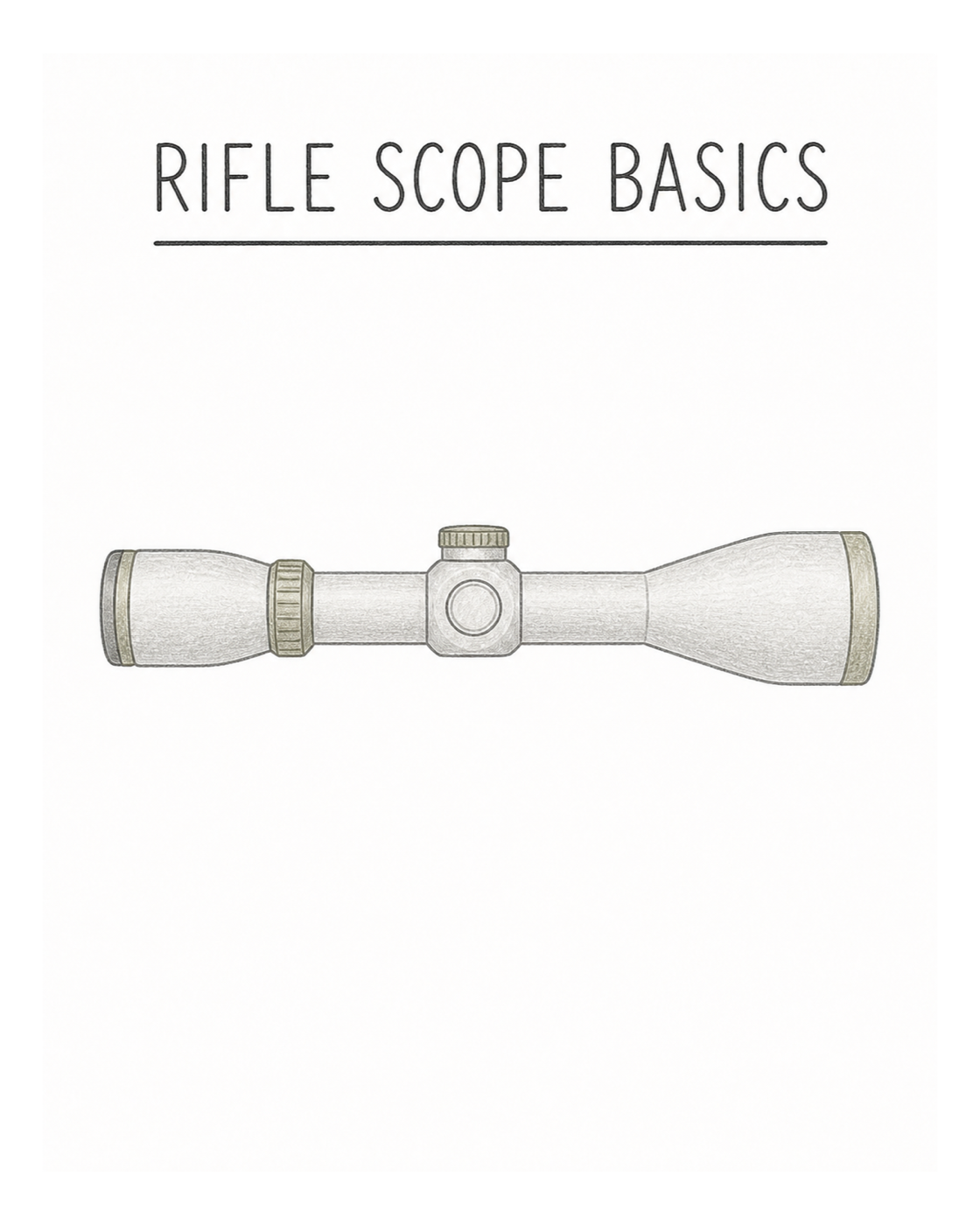
How to Read a Rifle Scope
A plain-language guide to magnification, objective size, eye relief, focal planes, turrets, and the other scope terms that can make a simple tool feel more complicated than it is.
Read the illustrated guide ↗