MT / Big Game
Montana
Wolf.
A current guide to Montana wolf hunting and trapping licenses, commission-set seasons, limits, identification, 24-hour reporting, inspection, and pelt tagging.
Official wolf page ↗01 / Overview
Start with the shape of the hunt.
Montana manages wolves as a regulated game and furbearer opportunity across forests, mountains, valleys, prairie breaks, and livestock country.
Annual season dates, methods, limits, trapping geography, court orders, and commission decisions can remain unsettled until late in the year. Never carry forward last season's rules.
Positive identification, exact license count, 24-hour harvest reporting, hide-and-skull inspection within 10 days, pelt tagging, tissue and tooth collection, and possession rules are central.
02 / Opportunity
Is this a good state for this hunt?
Wolf licenses can be obtainable, but finding wolves, proving access, identifying the animal, and complying with current limits and methods are demanding.
First-time wolf trappers need approved certification before setting a trap, plus the current trapper-license pathway.
Livestock conflict, private land, roads, other canids, pets, and current court boundaries require conservative decisions.
04 / Planning strategy
Verify the final rule before every season and outing.
Read the final current regulation, court-order geography, license limits, methods, reporting, inspection, and possession sections.
Scout tracks, howling, prey, travel corridors, roads, boundaries, livestock, other canids, and communication.
Use conservative identification, legal access, safe backstops, rapid reporting, inspection, and transport plans.
05 / Seasons
Learn the categories. Check the dates.
Montana publishes wolf opportunity through the exact license, permit or opportunity number, hunting district, legal animal, method, season, and eligibility. Those details can change between license years.
Use the current FWP regulation and corrections, issued documents, Hunt Planner, live quota status, BMA map, and controlling land manager for authoritative dates, boundaries, methods, access, closures, and reporting duties.
Open the current official digest ↗06 / Habitat
Where they live.
Western mountain forest
Elk and deer, snow tracks, logging roads, valleys, private timber, and rugged travel shape opportunity.
Prairie and breaks
Long travel, coulees, livestock, roads, private land, and canid identification dominate.
Agricultural and ranch edge
Working animals, homes, permission, conflict, roads, and safe direction require special restraint.
07 / Methods
Match the method to the exact hunt.
Calling or tracking where legal
Confirm current method, identify the complete animal, and control the backstop and boundary.
Incidental field opportunity
Carry the correct license and know current limits, reporting, inspection, and transfer rules before another hunt.
Trapping where legal
Complete certification and the full current license, device, nontarget, checking, reporting, and inspection pathway.
Current legal methods, ammunition rules, and hunt-specific restrictions come from CDFW and the applicable land manager.
08 / Beginner strategy
If I wanted to start, what would I actually do?
- 01
Read the current Montana rules
Begin with the current official page and regulation entry for wolf. Write down the Conservation License, Base Hunting fee, species license, permit, opportunity number, district, dates, legal animal, method, quota, and reporting duties.
Official resource ↗ - 02
Confirm how the opportunity is issued
Determine whether the hunt uses a general license, nonresident combination, special drawing, squared bonus points, B license, over-the-counter sale, quota, regional tag, free supplemental permit, or another current authorization.
- 03
Prove the district and access
Confirm legal boundaries, ownership, reservation and state-trust status, BMA permission, private access, roads, vehicles, fire, camping, retrieval, closures, and a backup route.
- 04
Scout the real constraints
Record final season rule, court geography, tracks, howling, prey, roads, boundaries, livestock, protected or domestic canids, safe directions, and inspection logistics.
- 05
Practice the complete sequence
Practice wolf, coyote, dog, and fox identification, safe field positions, backstop judgment, tag use, exact location, 24-hour report, hide and skull care, inspection, and transport.
- 06
Recheck, validate, inspect, and report
Immediately before hunting, recheck regulations, live quota status, access, weather, roads, and documents. Afterward, complete every carcass-tag validation, call-in, inspection, pelt tag, tooth, tissue, sample, and possession duty on time.
09 / Current information
Official resources.
Official wolf licenses, current season decisions, harvest limits, reporting, inspection, and trapping certification.
Official source ↗Montana furbearer and trappingOfficial current furbearer, wolf, trapping, quotas, reporting, pelt tagging, reciprocity, and license rules.
Official source ↗Current Montana hunting regulationsOfficial current species regulation publications, corrections, district descriptions, quotas, and planning resources.
Official source ↗Montana Hunt PlannerOfficial hunting districts, legal descriptions, harvest opportunity, ownership, access programs, and planning layers.
Keep learning
Useful before a wolf hunt.
Existing Sportsman’s Illustrated lessons are connected by slug, so this section can grow without duplicating article content.
 Rifle Hunting
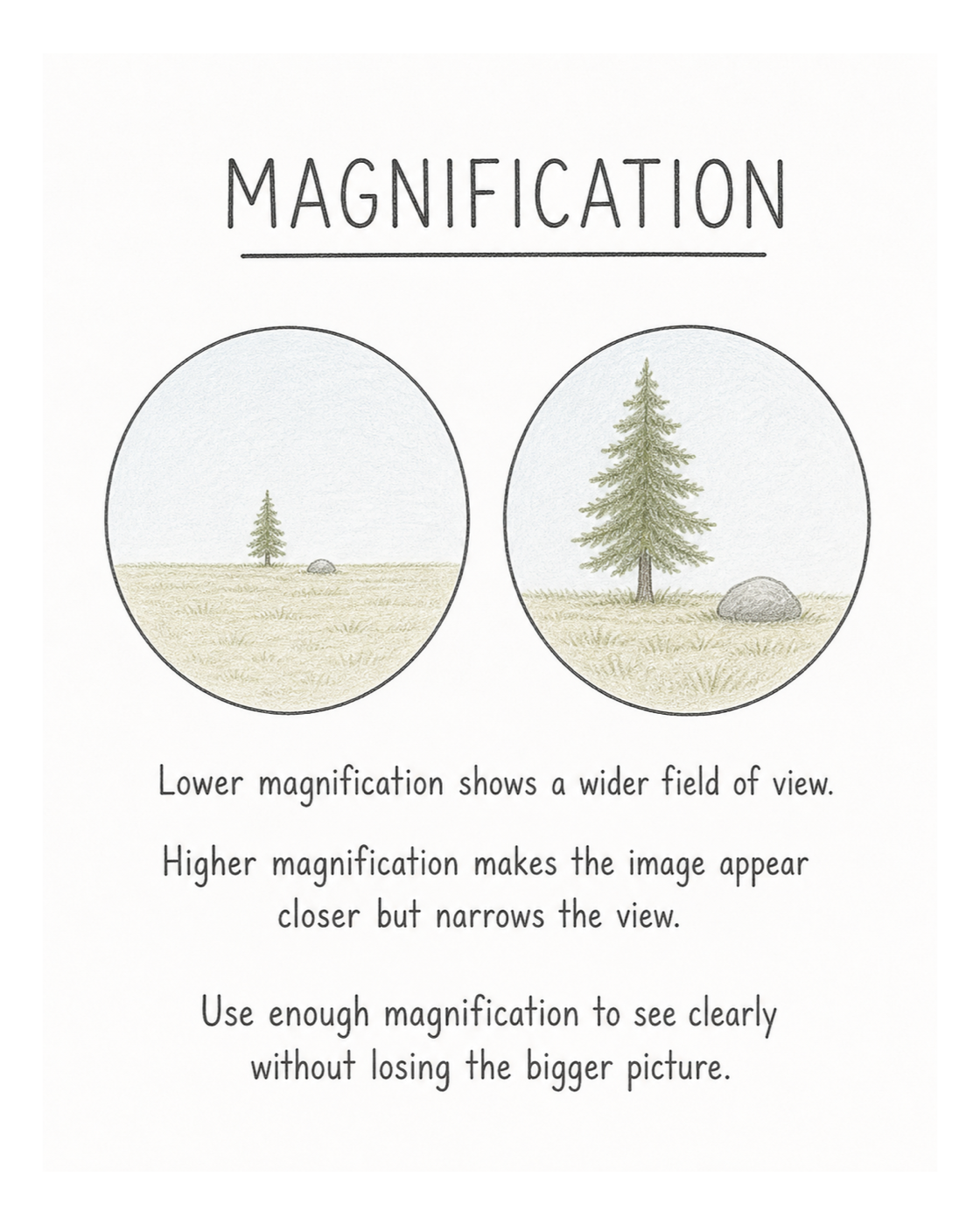
How to Read a Rifle Scope
What the numbers mean, which other specifications matter, and how to make sense of your first hunting optic.
 Hunter Education
What an Ammunition Box Tells You
A beginner’s guide to cartridge names, bullet weight, shotshell markings, and the information worth checking on factory ammunition.
 Fieldcraft
A Beginner’s Scouting Notebook
Five observations worth recording every time you walk a piece of hunting country.