OR / Small Game
Oregon
Small Game.
A practical guide to Oregon rabbits and squirrels, with exact-species identification, license and season checks, public and private access, safe shooting, retrieval, and field care.
Official small game page ↗01 / Overview
Start with the shape of the hunt.
Oregon small game includes rabbit, hare, and squirrel opportunities under species-specific rules. Some other mammals fall under different game, predator, or furbearer systems and should never be generalized together.
Small game can give a beginner repeatable practice in observation, map reading, access, quiet movement, safe shooting, recovery, field care, and honest restraint.
Begin with one positively identifiable species, one current regulation entry, and one nearby legal parcel rather than a vague plan to hunt anything small.
02 / Opportunity
Is this a good state for this hunt?
Opportunity may be geographically broad, but species distribution, season, disease, fire, county discharge rules, wildlife areas, private property, and federal-land restrictions shape the actual hunt.
Similar squirrels, rabbits, and hares can have different legal status or range. Identification must come before carrying a loaded firearm in likely habitat.
A short repeatable hunt near home is a stronger beginner plan than a long drive based on old abundance reports.
04 / Planning strategy
Choose one nearby species and learn it well.
Scout at the time of day you intend to hunt. Record tracks, droppings, feeding areas, water, escape cover, safe backgrounds, roads, homes, livestock, and other recreation.
Build identification from ODFW species material and the current regulation publication. If identity or legal status remains uncertain, do not shoot.
Use every outing to improve quiet movement, safe field positions, restraint, marking, complete recovery, meat care, and access notes.
05 / Seasons
Learn the categories. Check the dates.
Oregon separates game rabbits, hares, squirrels, unprotected mammals, predators, and furbearers under different current rules and publications.
Use the exact current entry for species, dates, areas, limits, methods, licenses, health guidance, and land restrictions.
Open the current official digest ↗06 / Habitat
Where they live.
Brush and grass edge
Food, low cover, burrows, water, roads, and escape routes can concentrate rabbits around active periods.
Forest and oak country
Mast, tree species, canopy, timber edge, roads, ownership, and positive squirrel identification control the opportunity.
High desert and agricultural margin
Shrub cover, irrigation, buildings, livestock, private property, heat, and safe shooting backgrounds matter.
07 / Methods
Match the method to the exact hunt.
Slow still-hunting
Move quietly, pause often, identify completely, keep a safe background, and stay within a proven range.
Observation and short stalk
Use binoculars and terrain to confirm species, legal status, other people, roads, buildings, livestock, and shooting direction.
Other legal methods
Archery, falconry, trapping, or predator methods can carry separate rules and should not be inferred from a rabbit or squirrel hunt.
Current legal methods, ammunition rules, and hunt-specific restrictions come from CDFW and the applicable land manager.
08 / Beginner strategy
If I wanted to start, what would I actually do?
- 01
Read the current ODFW material
Start with ODFW’s current page and regulation entry for small game. Record the exact license, tag, validation, hunt number, area, season, method, and reporting rules.
Official resource ↗ - 02
Confirm the opportunity path
Determine whether the hunt is general, controlled, limited by a quota, or requires a tag, permit, validation, HIP survey, stamp, reservation, check-in, or other current authorization.
- 03
Prove access and boundaries
Confirm the exact hunt area or property, legal entry, private boundaries, land-manager rules, travel management, fire closures, road conditions, and a backup route.
- 04
Scout the real constraints
Record exact species, tracks, droppings, food, water, cover, active time, safe backgrounds, roads, ownership, other recreation, county rules, fire, and health notices.
- 05
Practice the complete field sequence
Practice identification, safe carries, field positions, range limits, restraint, marking, full recovery, disease-safe handling, field care, transport, and honest reporting.
- 06
Recheck, tag, and report
Immediately before hunting, recheck regulations, weather, fire, roads, access, equipment, and documents. Validate any harvest correctly and complete every required outcome report or checkout afterward.
09 / Current information
Official resources.
Official starting point for Oregon big game, game birds, licenses, education, and hunting resources.
Official source ↗Current Oregon hunting regulationsOfficial hub for current big-game, game-bird, and furbearer regulation publications and updates.
Official source ↗How to buy an Oregon license or tagOfficial directions for MyODFW accounts, licenses, tags, permits, paper documents, and electronic documents.
Official source ↗ODFW hunting access mapsOfficial wildlife management, deer hunt area, wildlife area, Access and Habitat, and travel-management maps.
Official source ↗Oregon legal hunting methodsOfficial overview of species-specific weapon and ammunition restrictions with links to current regulations.
Keep learning
Useful before a small game hunt.
Existing Sportsman’s Illustrated lessons are connected by slug, so this section can grow without duplicating article content.
 Rifle Hunting
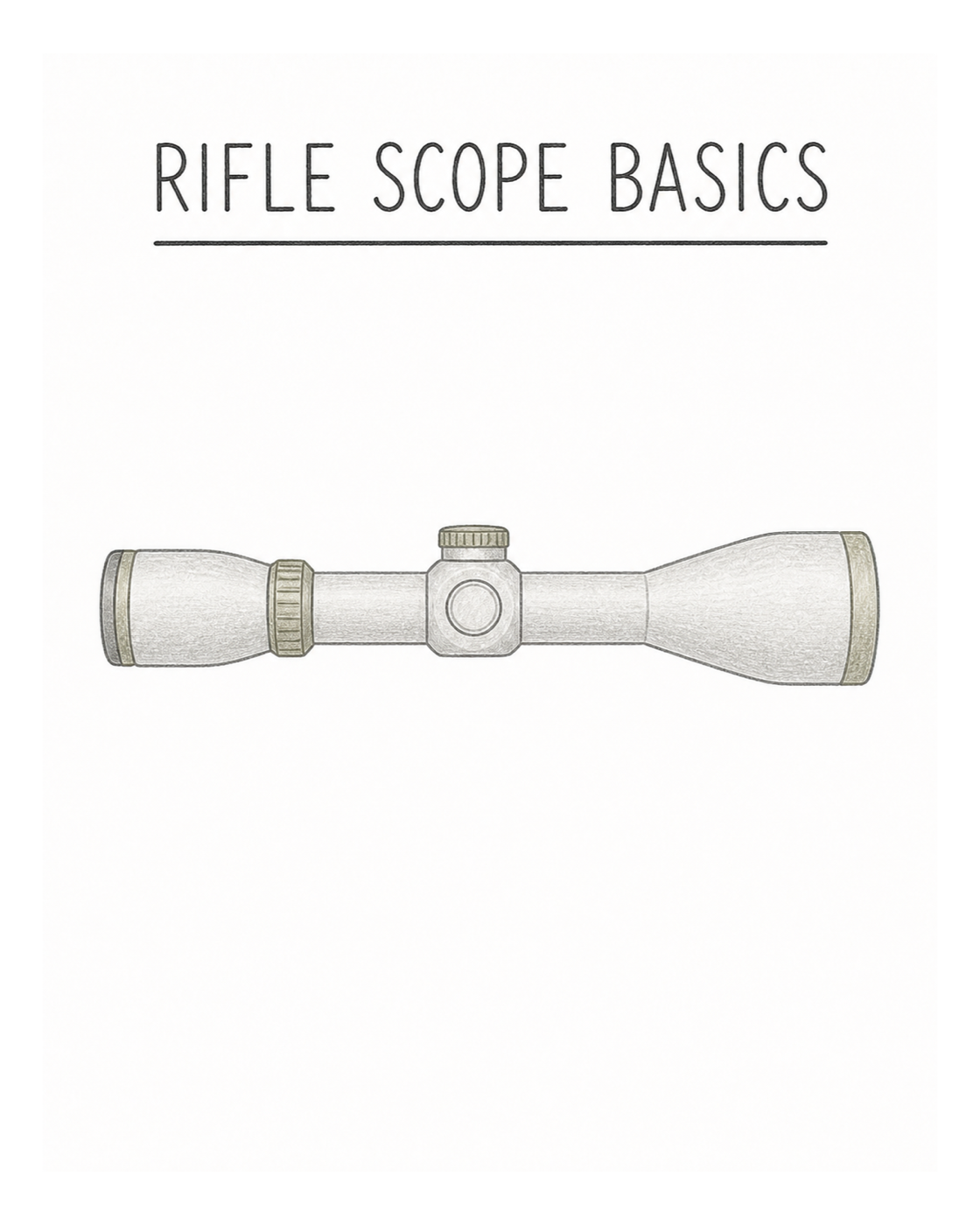
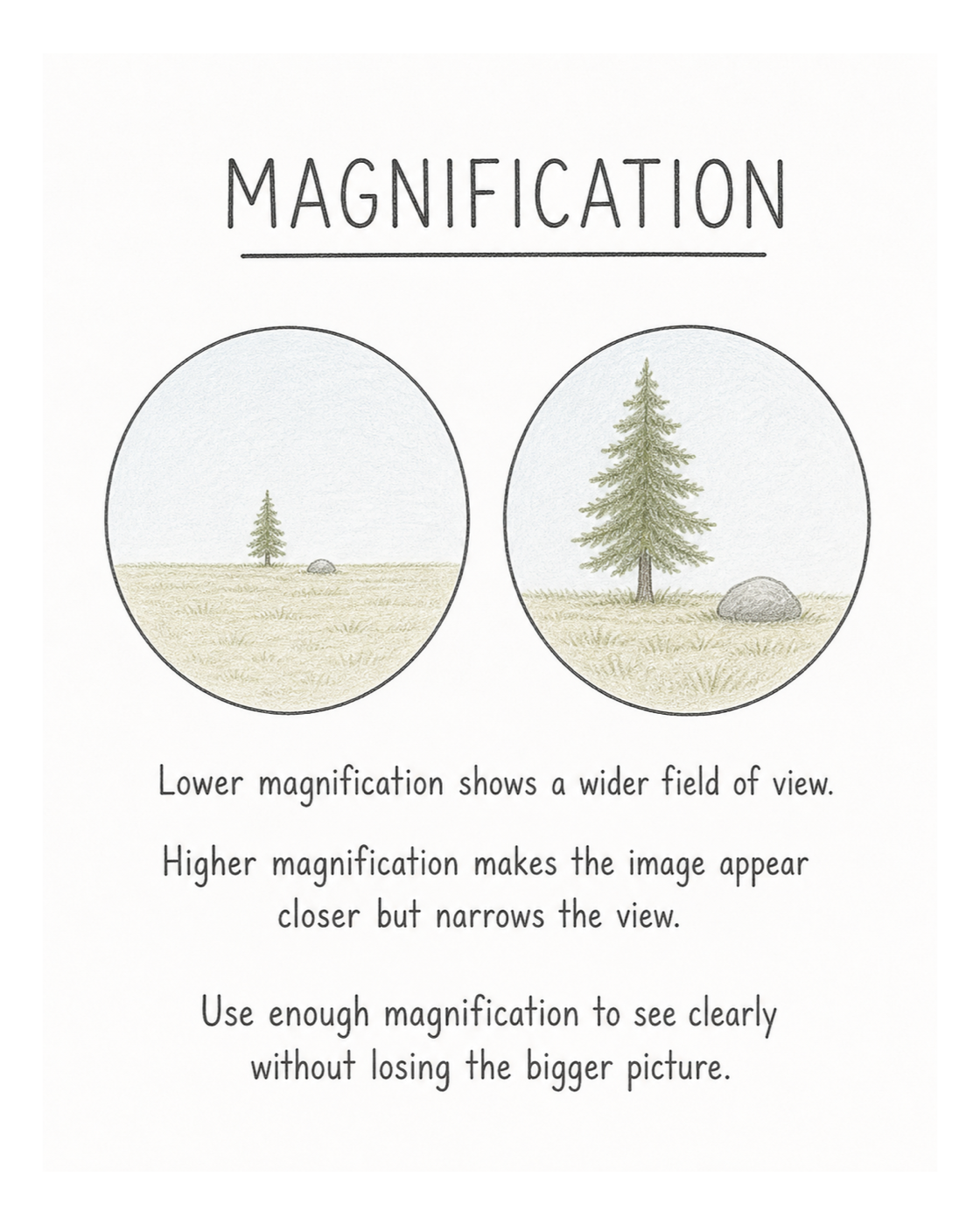
How to Read a Rifle Scope
What the numbers mean, which other specifications matter, and how to make sense of your first hunting optic.
 Hunter Education
What an Ammunition Box Tells You
A beginner’s guide to cartridge names, bullet weight, shotshell markings, and the information worth checking on factory ammunition.
 Fieldcraft
A Beginner’s Scouting Notebook
Five observations worth recording every time you walk a piece of hunting country.